Ear Cleanings
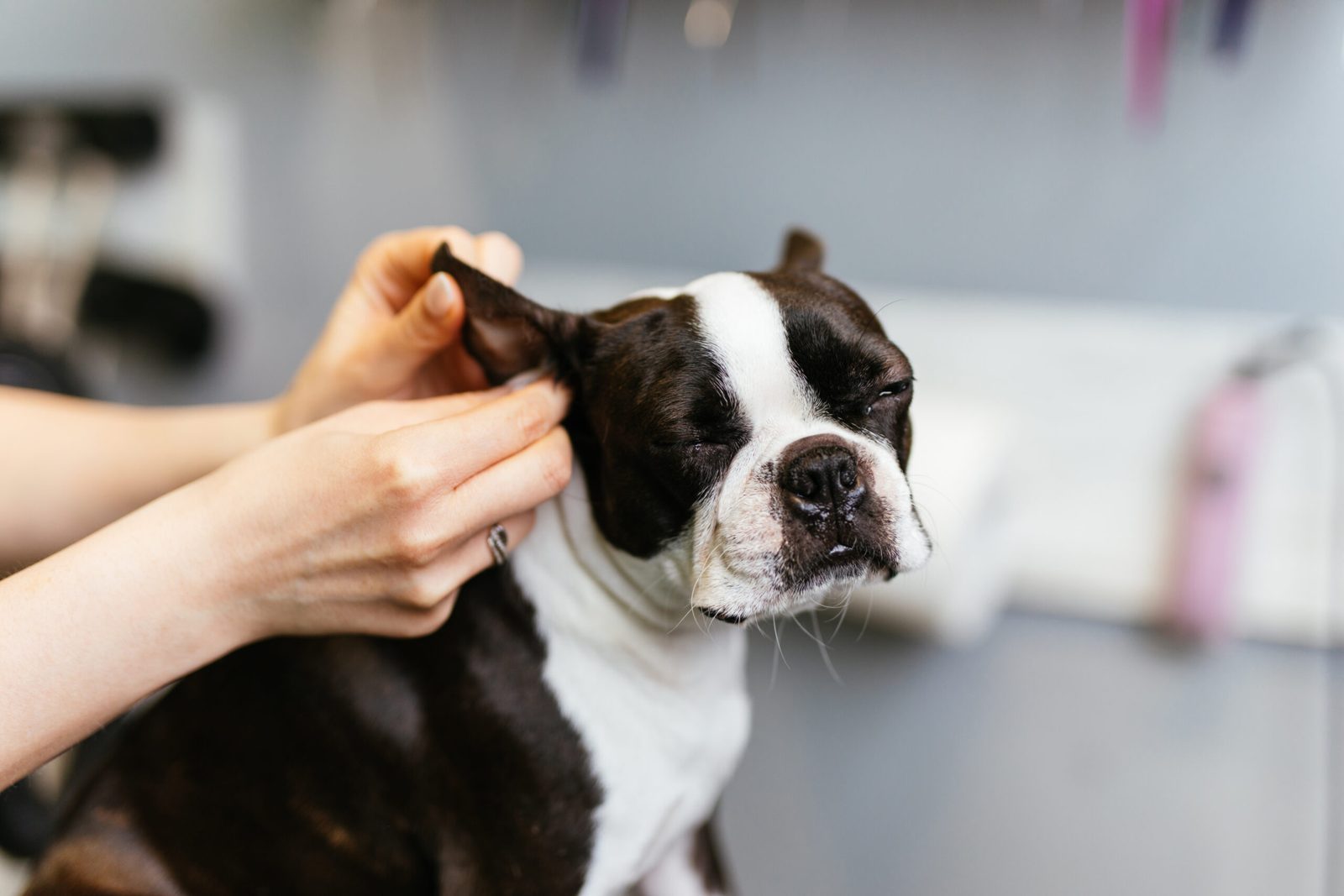
Request an AppointmentCleaning Ears at Home
Why do we need to clean ears?
What You’ll Need
Before you begin, gather:
- Cotton balls
- Q-tips
- Veterinary ear cleaner
Veterinary ear cleaner is available at our office. Contact us and our team can recommend an ear cleaner safe for your dog’s skin and tailored to allergy or skin concerns.
Cleaning the Ears
- Soak a cotton ball with ear cleaner.
- Place it in your dog’s ear canal and gently push it down into the canal. The unique L-shaped structure of a dog’s ear canal makes it safe to insert cotton balls deeper than you might expect – the eardrum is protected by the horizontal canal. For larger dogs, the cotton ball may go completely into the canal. This should feel gentle and not require force.
- Massage the base of the ear for 10–15 seconds. You’ll hear a gentle squish as the cleaner and cotton ball agitate the debris deep in the canal.
- Remove the wet cotton ball (you may need to gently fish it out with your fingers or tweezers if it went deep) and follow with a dry cotton ball to absorb moisture and debris.
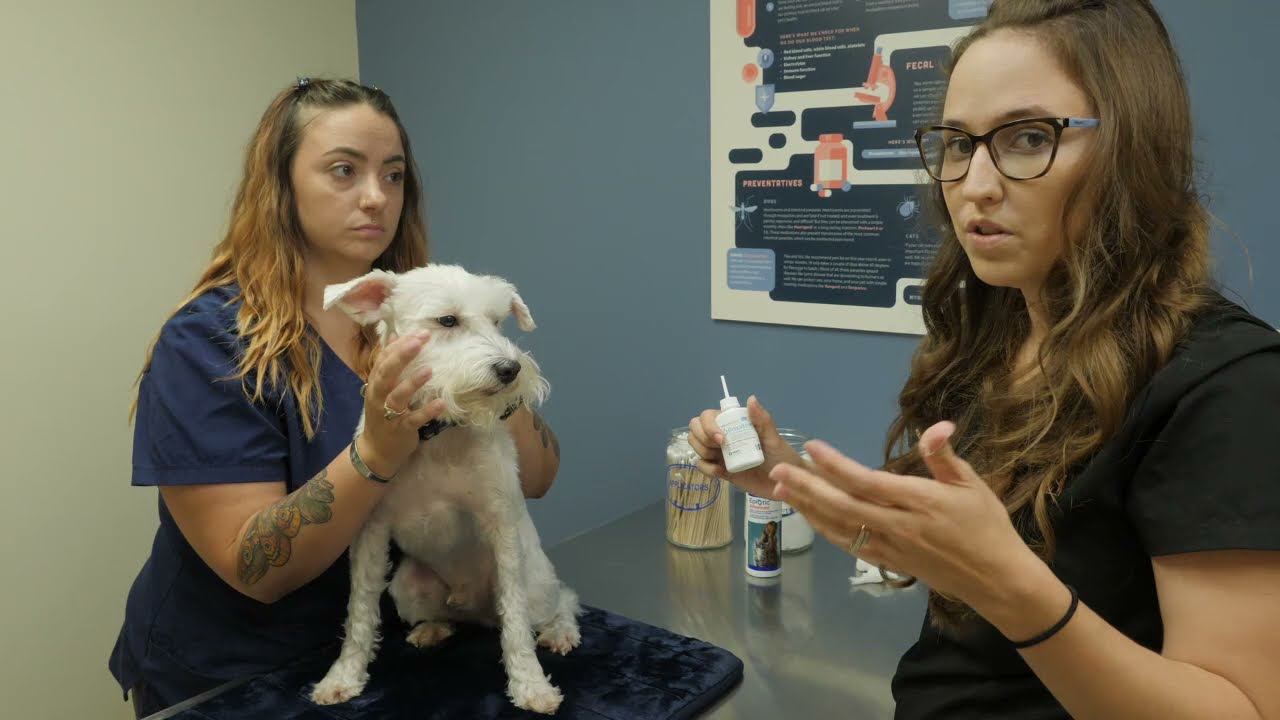
- Use a Q-tip to clean the visible outer folds and creases inside the ear. As demonstrated in our video, you can carefully use Q-tips in the visible portions of the canal to remove debris. Due to the canal’s shape, the eardrum is naturally protected and cannot be reached with a Q-tip when cleaning straight down.
- Alternate wet cotton balls, dry cotton balls, and Q-tips until everything comes out clean.
- Finish with a few dry cotton balls to ensure the ear canal is dry.
Pro-Tip: Let your dog shake their head between cotton balls. It helps pull debris from deep in the ear closer to the surface, making it easier to scoop out.
Applying Prescription Ear Medication
If your veterinarian has prescribed ear medication:
- Insert the applicator tip into the ear canal. Go as deep as the nozzle of the bottle allows.
- Apply a generous squeeze.
- Massage the ear base to coat the canal.
This ensures the treatment reaches both the vertical and horizontal ear canals, targeting the full area of infection.
When to Call My Best Friend Vet
Contact us if you notice:
- Redness, odor, or discharge
- Frequent head shaking or scratching
- Pain when touching the ears
- If you’re unsure about the technique after watching the video
- If your dog is resistant or shows signs of pain during cleaning
- If the debris has the color or consistency of coffee grounds
Our veterinary team can examine your dog, prescribe appropriate treatment, and recommend a long-term ear care plan. We take time to get to know you and your pet, demonstrating techniques in person and answering all your questions about ear infection treatment and preventive care.
Schedule an appointment with My Best Friend Vet in Olivette to discuss your pet’s ear health and allergy care. We’ll ensure your dog stays comfortable, healthy, and happy year-round.
Ear Infections
Ear Infection Overview
How common are ear infections in dogs? – Infection of the external ear canal (outer ear infection) is called otitis externa and is one of the most common types of infections seen in dogs. Some breeds, particularly those with large, floppy or hairy ears like Cocker Spaniels, Miniature Poodles, or Old English Sheepdogs, appear to be more prone to ear infections, but ear infections may occur in any breed—especially when linked to seasonal allergies.
What are the symptoms of an ear infection? – Ear infections are painful! Many dogs will shake their head and scratch their ears trying to relieve the discomfort. The ears often become red and inflamed and develop an offensive odor. A black or yellowish discharge commonly occurs. In chronic cases the ears may appear crusty or thickened and the ear canals often become narrowed (stenotic) due to the chronic inflammation.
An important part of our physical examination is the identification of underlying disease. Many dogs with chronic or recurrent ear infections have allergies. If underlying disease is suspected, it must be diagnosed and treated or the pet will continue to experience chronic ear problems.
What is the prognosis? – Nearly all ear infections that are properly diagnosed and treated can be successfully managed. However, if an underlying cause remains unidentified and untreated, the outcome will be less favorable. Several recheck examinations may be needed before the outcome is successful.
How important is it to treat an ear infection? – Very important! Dogs with ear infections are uncomfortable. Their ears are a source of constant pain and they frequently scratch them and shake their head. This can cause a condition called an “aural hematoma”, in which blood vessels in the ear flap break, causing a painful swelling that can eventually require surgical treatment. Deep ear infections can damage or rupture the eardrum, causing an internal ear infection and even permanent hearing loss.
Additional Cleaning During Treatment – During your appointment, we will clean your dog’s ears thoroughly and then treat with a medication. However, sometimes we will recommend additional rounds of ear cleanings at home. At-home ear cleanings are also often recommended to be after swimming. See video for additional information.
Is there anything I need to know about administering medication in the ear? – It is important to get the medication into the horizontal part of the ear canal. (Unlike our ear canal, the dog’s external ear canal is “L” shaped. The vertical canal connects with the outside of the ear and is the upper part of the “L”. The horizontal canal lies deeper in the canal and terminates at the eardrum. Our goal is to administer the medication into the lower part of the “L” – the horizontal ear canal.)
The ear canal may be medicated by following these steps:
- Gently pull the earflap straight up and slightly toward the back and hold it with one hand.
- Using the other hand, apply a small amount of medication into the vertical part of the ear canal while continuing to keep the earflap elevated. Hold the ear up long enough for the medication to run down to the turn between the vertical and horizontal canal.
- Put one finger in front of and at the base of the earflap, and put your thumb behind and at the base.
- Massage the ear canal between your finger and thumb. A “squishing” sound tells you that the medication has gone into the horizontal canal.
- Release the ear and let your dog shake its head. Many medications will contain a wax solvent and you may observe debris dissolved in this solvent and leaving the ear as your dog shakes its head.
Additional Cleaning During Treatment – It is important to clean your dog’s ears in addition to treatment if recommended by your veterinarian. At-home ear cleanings are also often recommended to be performed after swimming. See video for additional information.